How to Run Multinomial Logistic Regression in SPSS
This guide explains how to perform multinomial logistic regression in SPSS, interpret outputs correctly, apply multilevel extensions, write syntax, and report results in APA style.
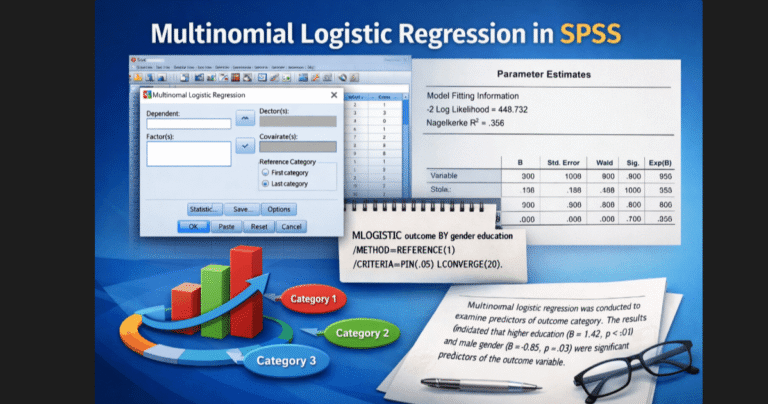
This guide explains how to perform multinomial logistic regression in SPSS, interpret outputs correctly, apply multilevel extensions, write syntax, and report results in APA style.
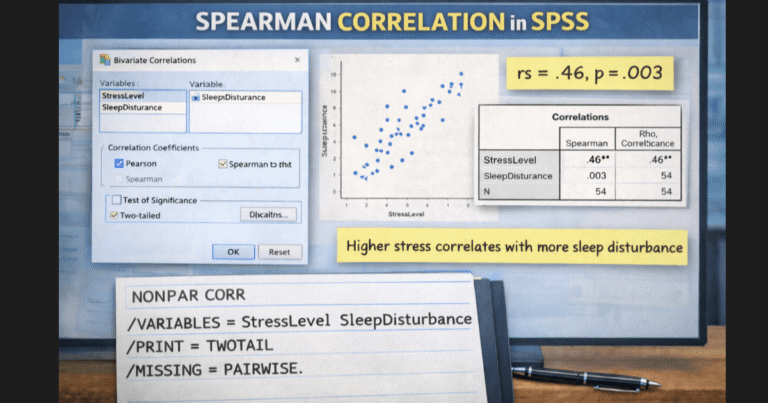
Spearman correlation in SPSS helps researchers analyze monotonic relationships when data violate normality assumptions. This guide explains how to run Spearman correlation in SPSS, interpret output tables, visualize results with scatter plots, perform partial Spearman correlation, and report findings accurately for academic research.
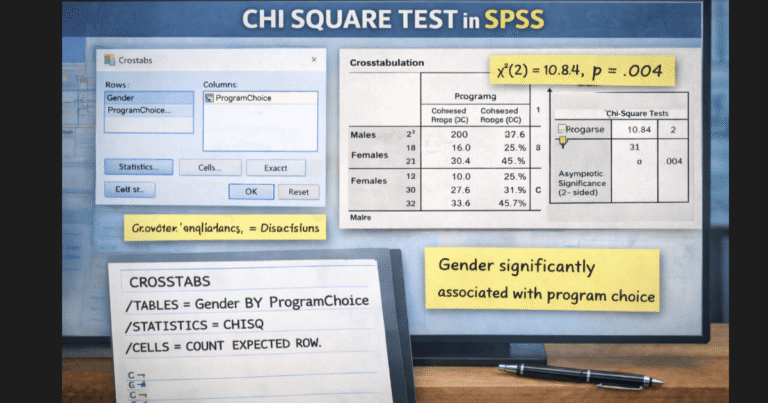
The chi square test in SPSS helps researchers examine associations between categorical variables using frequency data. This guide explains how to run a chi square test in SPSS, interpret output tables, perform post hoc analysis, calculate effect size, and report results correctly for academic research.
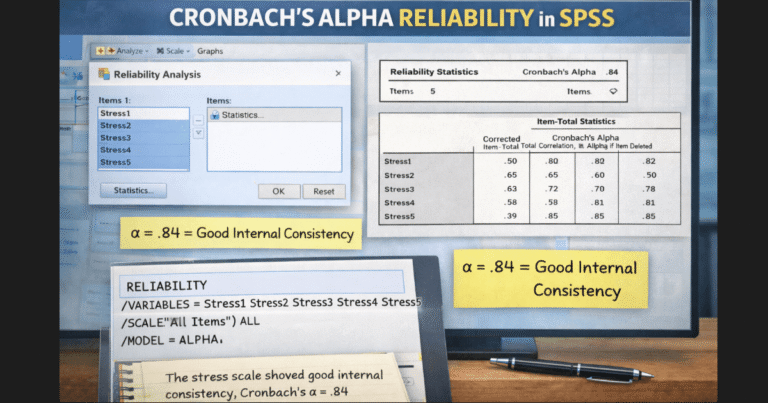
Cronbach’s alpha reliability in SPSS helps researchers assess the internal consistency of survey scales and questionnaires. This guide explains how to calculate Cronbach’s alpha in SPSS, interpret output tables, evaluate item performance, use syntax, and report reliability results correctly for academic research.
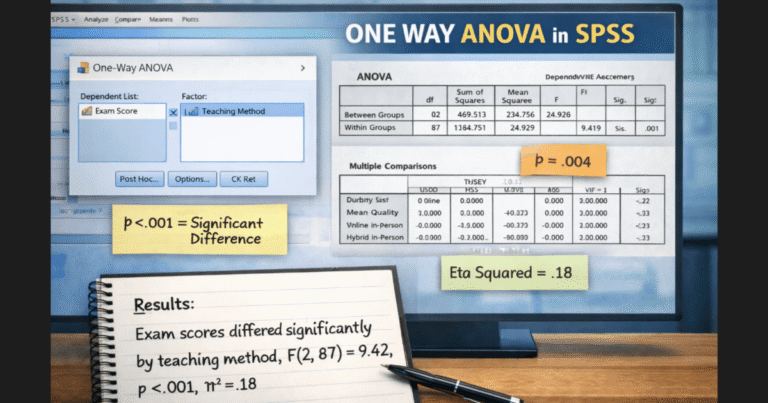
One way ANOVA in SPSS allows researchers to compare mean differences across three or more groups using a single factor. This guide explains how to do a one way ANOVA in SPSS, interpret output tables, run multiple comparisons, calculate effect size, and report results accurately for academic research.
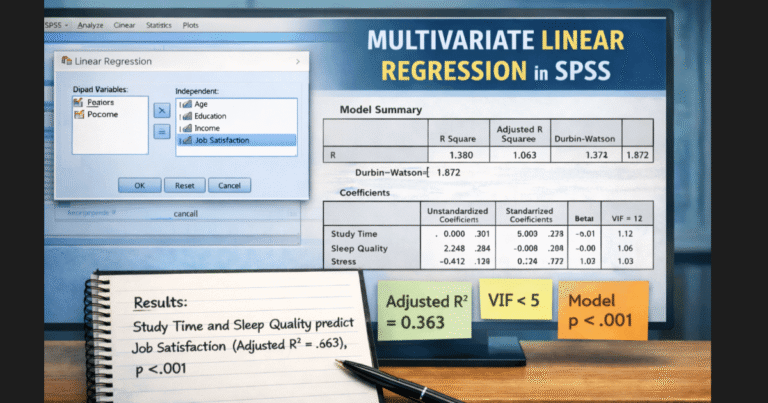
Multivariate linear regression in SPSS allows researchers to evaluate how multiple predictors jointly influence a continuous outcome variable. This guide explains how to perform multivariate linear regression in SPSS, check assumptions, interpret output tables, and report results accurately for theses, dissertations, and academic research.
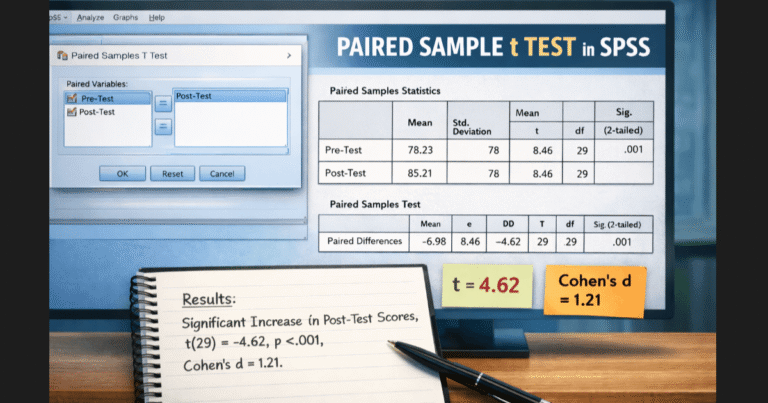
The paired sample t test in SPSS is used to compare two related measurements, such as pre-test and post-test scores from the same participants. This guide explains what a paired sample t test is in SPSS, how to run it correctly, how to read SPSS output tables, and how to interpret results for theses, dissertations, and academic research.
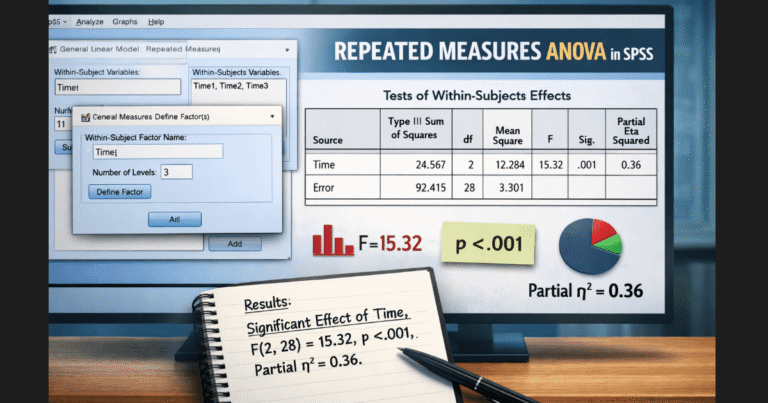
Repeated measures ANOVA in SPSS is essential for analyzing within-subject data collected across time or conditions. This practical guide explains how to run repeated measures ANOVA in SPSS, interpret output tables, handle one-way and two-way designs, report effect size, and avoid common analytical errors—ideal for thesis and dissertation research.
Most students understand what a cross sectional study is but struggle with analysis, sampling, and interpretation. This guide explains how to design your study, choose the right statistical tests, and avoid mistakes that lead to rejected drafts.
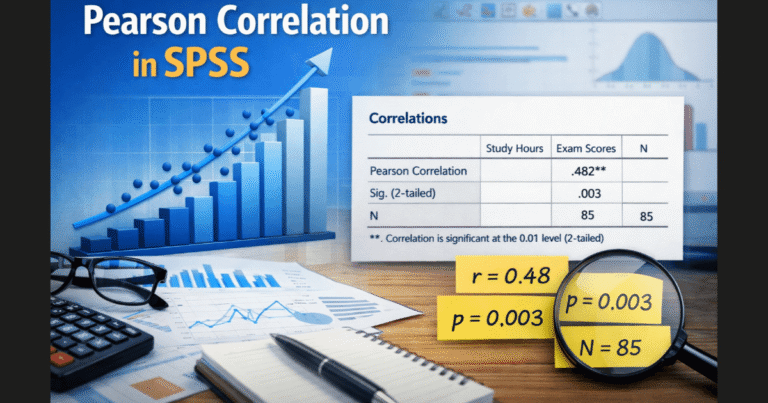
Confused by Pearson correlation results in SPSS? This guide explains how to calculate, interpret, and report Pearson correlation correctly. Learn how to read SPSS output, understand p-values and effect size, and avoid common errors that weaken research. If you need accurate SPSS correlation analysis or expert interpretation for your study, our SPSS specialists can help you get reliable, publication-ready results.
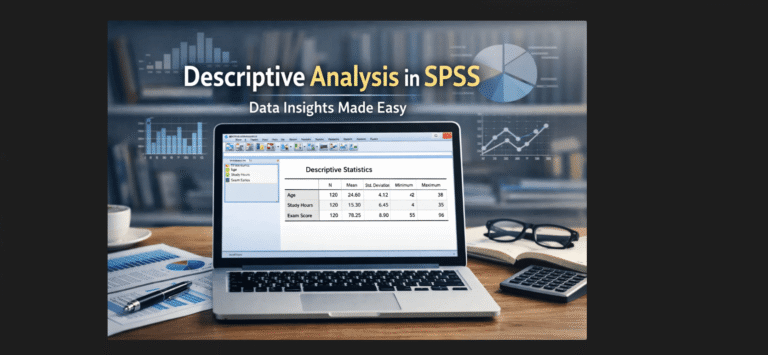
Descriptive analysis in SPSS is the foundation of every credible quantitative study. Yet many students and researchers struggle with running the correct statistics, interpreting output, and reporting results in APA format. This comprehensive guide explains descriptive analysis in SPSS step by step, with clear definitions, practical examples, sample tables, and proper interpretation.
More importantly, it shows how to avoid common mistakes that can weaken your results section or delay approval. If you need help running descriptive statistics, preparing publication-ready tables, or ensuring your analysis meets academic standards, professional SPSS support can save you time and prevent costly errors.
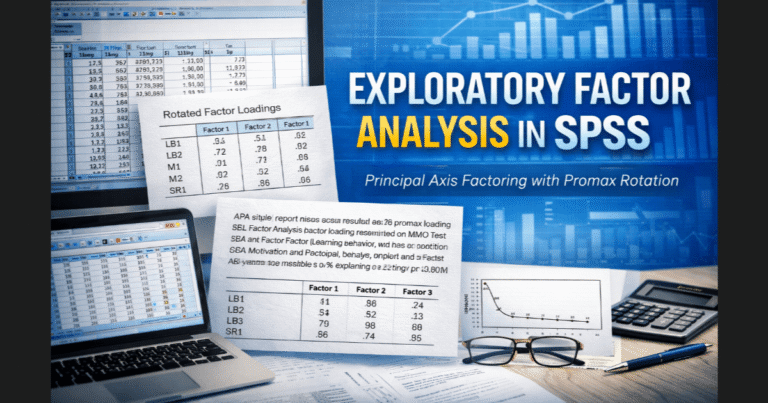
Exploratory factor analysis in SPSS is often misapplied, leading to weak factor structures, reviewer criticism, and costly revisions. This guide explains what exploratory factor analysis is, how to run EFA in SPSS, sample size requirements, assumptions, and interpretation. If you need defensible EFA with clear factor solutions and APA-style reporting for your thesis or journal paper, our statisticians can run and document the analysis for you.
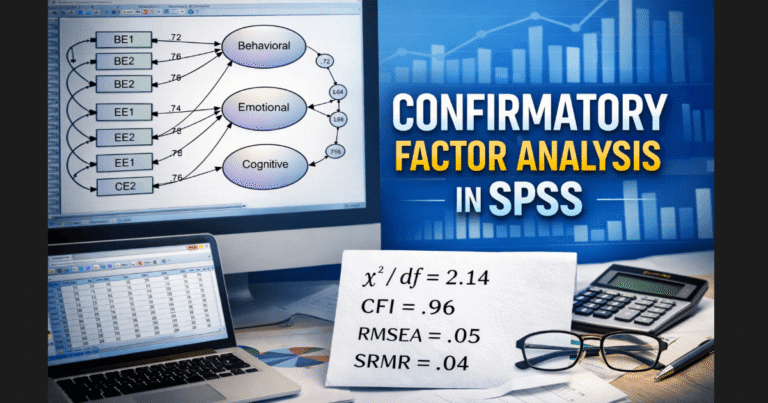
Confirmatory factor analysis in SPSS requires more than running AMOS and reporting fit indices. Poor model specification, incorrect assumptions, and weak interpretation often lead to rejected theses and journal submissions. In this guide, we explain confirmatory factor analysis, CFA steps in SPSS, result interpretation, and multi-group CFA. If you need publication-ready CFA with clear APA reporting and expert validation, our team can handle the analysis and documentation for you.
Not sure which SPSS version to use or how to access the IBM SPSS free trial? This guide walks you through pricing, downloads, student licenses, and version differences step by step.
Cox regression in SPSS can be complex, especially when dealing with censored data, time-dependent covariates, and journal-ready interpretation. This in-depth guide explains how to run Cox regression in SPSS, interpret hazard ratios correctly, and apply the results using real-life examples. If you need expert support for accurate analysis, assumption checks, or publication-ready reporting, this article shows both the methodology and how professional SPSS assistance can save time and prevent costly errors.