Many dissertation students reach a critical point where progress slows down, especially during survey design and data analysis. What initially looks straightforward quickly becomes complex. Poorly structured questionnaires, unclear variables, low response rates, and confusing statistical outputs can delay your graduation timeline.
If you are currently struggling, you are not alone. Thousands of students across the US, UK, Canada, Australia, and beyond face similar challenges every year. The difference between those who finish on time and those who remain stuck often comes down to one thing: expert guidance.
This guide explains where most students go wrong, how to fix it, and how to confidently complete your dissertation using professional survey design and analysis help.
Why Survey Design Makes or Breaks Your Dissertation
Survey design is the foundation of your research. If it is flawed, even the most advanced analysis cannot fix the problem.
Common issues students face include:
- Poorly worded or biased questions
- Lack of alignment with research objectives
- Incorrect scaling (e.g., Likert misuse)
- Missing constructs or variables
- Weak validity and reliability
A well-designed survey ensures that your data answers your research questions clearly and accurately.
If you are unsure whether your questionnaire is strong enough, reviewing a detailed guide like Professional Survey Design and Analysis Help can help you identify gaps early.
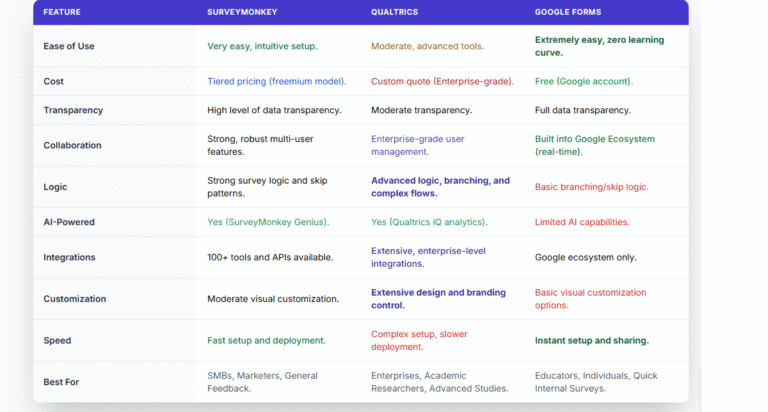
For students using tools like Qualtrics or SurveyMonkey, proper setup is equally critical. Services such as Qualtrics Survey Design and Setup Services ensure your survey logic, branching, and structure are professionally built.
The Hidden Challenge: Survey Data Analysis
Once data collection is complete, many students assume the hard part is over. In reality, analysis is where most dissertations fail.
Key challenges include:
- Choosing the correct statistical tests
- Cleaning and preparing messy data
- Interpreting SPSS, R, or Stata outputs
- Writing Chapter 4 clearly and correctly
- Linking results back to research questions
For example, many students struggle to decide between regression, ANOVA, or correlation. A helpful breakdown like Statistical Tools in Research can guide your decision-making.
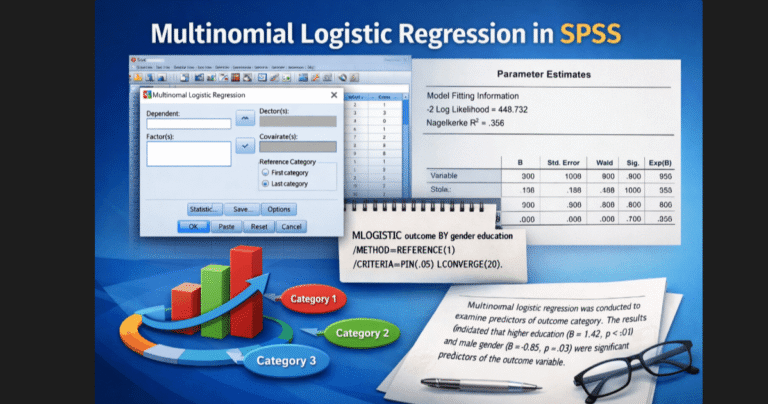
If your study involves Likert scale data, understanding proper techniques is essential. This resource on How to Analyze Likert Scale Data in SPSS provides practical direction.
Common Mistakes That Keep Students Stuck
1. Starting Analysis Without a Clear Plan
Jumping into SPSS or R without a structured analysis plan leads to confusion and wasted time.
2. Ignoring Data Cleaning
Unclean data produces unreliable results. Learn the importance of preparation through Data Cleaning in SPSS.
3. Misinterpreting Results
Many students report results incorrectly, especially p-values and regression outputs. This affects marks significantly.
4. Weak Reliability Testing
Failing to test internal consistency weakens your findings. Tools like Cronbach’s alpha are essential.
5. Poor Chapter 4 Writing
Even correct analysis can lose marks if not clearly explained. See guidance in How to Write Up a Dissertation Analysis Using SPSS.
What Effective Survey Design and Analysis Looks Like
A high-quality dissertation includes:
- Clear research objectives aligned with survey questions
- Proper sampling methods (see Cochran Formula for Sample Size)
- Clean, structured datasets
- Correct statistical tests (e.g., regression, ANOVA, correlation)
- Accurate interpretation of results
- Professional reporting in APA or required format
If you are unsure about your methodology, reviewing foundational concepts from sources like SAGE Research Methods can strengthen your understanding.
When to Seek Professional Help
You should consider expert support if:
- Your supervisor feedback is unclear or limited
- You are unsure which analysis method to use
- Your SPSS or R outputs do not make sense
- You are running out of time
- You need high-quality, accurate results
Professional services like Dissertation Data Analysis Services are designed specifically for students in this situation.
For those needing hands-on SPSS support, Online SPSS Help provides step-by-step assistance tailored to your dataset.
Complete Solution: From Survey Design to Final Report
A reliable support system should cover:
1. Questionnaire Design
- Structuring questions aligned with objectives
- Ensuring validity and reliability
2. Survey Setup
- Using tools like Qualtrics or SurveyMonkey
- Logic, branching, and testing
3. Data Analysis
- SPSS, R, Stata, or Jamovi
- Regression, ANOVA, correlation, factor analysis
4. Interpretation
- Clear explanation of outputs
- Linking results to hypotheses
5. Dissertation Writing
- Chapter 4 and 5 support
- Proper formatting and referencing
You can explore a full-service approach through Survey Design Services or Dissertation Statistics Help.
Why Students Choose myspsshelp.com
Students across multiple regions trust myspsshelp.com because of:
- Accurate and plagiarism-free work
- Fast turnaround times
- Expertise in SPSS, R, and advanced statistics
- Clear explanations that help you understand your work
- Personalized support based on your research topic
Whether you are working on a business, healthcare, social sciences, or engineering dissertation, expert guidance can significantly improve your results.
Conclusion
Survey design and analysis are often the most challenging parts of a dissertation. Many students get stuck not because they lack effort, but because they lack the right guidance.
The good news is that you do not have to struggle alone. With the right support, you can transform a confusing dataset into clear, meaningful insights and complete your dissertation with confidence.
If you are currently stuck, this is the right time to take action. Get expert help, save time, and ensure your work meets academic standards.
FAQs on Survey Design and Analysis for Dissertation Students
1. What is survey design in a dissertation?
It involves creating structured questionnaires that accurately capture data aligned with your research objectives.
2. Why is survey design important?
It determines the quality and reliability of your data.
3. What software is best for survey analysis?
SPSS, R, Stata, and Jamovi are widely used depending on your research needs.
4. How do I choose the right statistical test?
It depends on your variables and research questions. Guides like Statistical Tools in Research can help.
5. What is the biggest mistake in survey research?
Poor questionnaire design and incorrect data analysis.
6. Can I get help with SPSS analysis?
Yes, services like Help with SPSS Analysis provide expert support.
7. How long does survey analysis take?
It depends on complexity but typically ranges from a few days to a couple of weeks.
8. What if my data is already collected?
You can still get help with cleaning, analysis, and interpretation.
9. How do I improve response rates?
Use clear questions, incentives, and proper distribution channels.
10. Is professional help allowed?
Yes, as long as it supports learning and does not violate academic policies.
11. What is reliability testing?
It measures consistency in your survey responses, often using Cronbach’s alpha.
12. Can I finish my dissertation on time if I am stuck?
Yes, with expert guidance and structured support.